
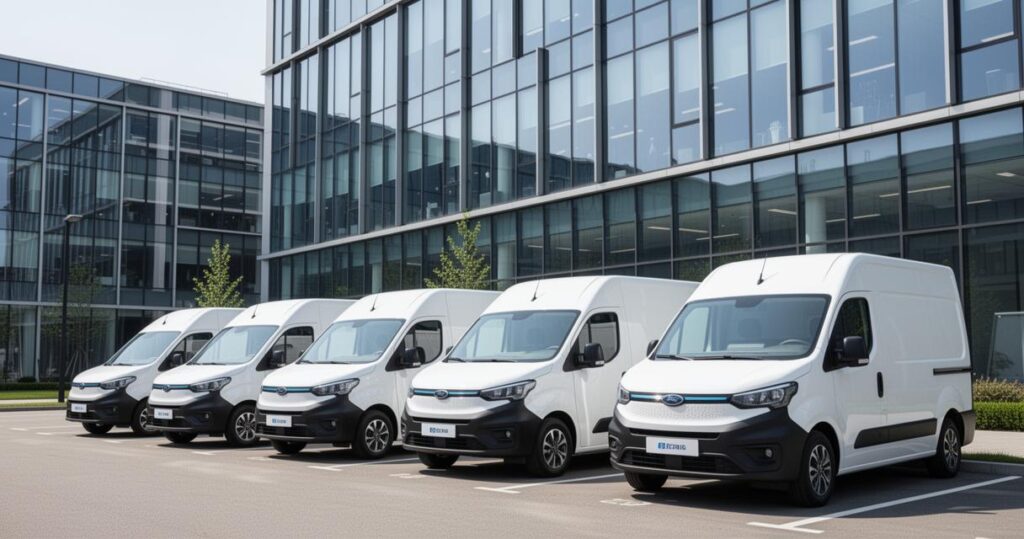
As businesses across the United Kingdom accelerate their transition towards greener operations, the question of how to acquire vehicles for a commercial fleet has never been more pressing. Whether you are a sole trader in need of a single electric van or a large enterprise looking to overhaul dozens of company cars, understanding the available acquisition routes is essential to making a sound financial and environmental decision. This guide explores the principal options open to businesses seeking to build an eco-friendly fleet.
In brief
- Businesses looking to transition to eco-friendly fleets can choose between outright purchase, leasing, salary sacrifice schemes, or vehicle subscriptions.
- Outright purchase offers long-term financial control and tax advantages through capital allowances, though it requires managing vehicle depreciation and battery health.
- Business contract hire allows companies to access modern electric vehicles with lower upfront costs and predictable monthly payments, shifting residual value risk to the provider.
- Leasing agreements often include bundled services such as maintenance, tyres, and charging infrastructure, which simplifies fleet management and administrative tasks.
- Salary sacrifice schemes enable employees to access electric vehicles via gross salary deductions, offering significant tax benefits for both staff and employers.
- Vehicle subscription services provide maximum flexibility through short-term, rolling contracts that are ideal for businesses with seasonal needs or those hesitant to commit to long-term leases.
- Choosing the optimal acquisition strategy requires a balanced assessment of a company’s financial position, operational requirements, and long-term sustainability goals.
Outright Purchase and Business Loans for Electric Vehicles
Buying a vehicle outright remains one of the most straightforward routes for businesses that have the capital available. When a company purchases an electric vehicle directly, it becomes an asset on the balance sheet, offering a degree of financial certainty and control that other arrangements do not always provide. For businesses wondering what are the options for buying a vehicle for your business, direct ownership is often the first avenue explored, and it carries several compelling advantages.
Capital Allowances and Tax Benefits of Direct Ownership
One of the most significant incentives for outright purchase of low-emission vehicles in the UK is access to capital allowances. Businesses can write down the cost of qualifying electric vehicles against their taxable profits, which can meaningfully reduce the overall tax burden. This makes direct ownership particularly attractive for profitable businesses looking to invest in sustainable assets whilst managing their Corporation Tax liability. In cases where capital is not immediately available, a business loan can fund the purchase whilst still allowing the company to claim ownership and the associated tax reliefs.

Managing long-term asset value and battery health
Owning a vehicle outright does, however, place the responsibility for depreciation and maintenance squarely on the business. Electric vehicles introduce a particular consideration in the form of battery health, which can affect residual value over time. Businesses should factor in the cost of servicing and the potential need for battery replacement when calculating the true long-term cost of ownership. Nonetheless, for organisations with strong maintenance capabilities or stable vehicle usage patterns, outright purchase can prove to be the most cost-effective solution over the lifetime of the asset.
Business contract hire and green fleet leasing options
For many UK businesses, contract hire represents an appealing middle ground between ownership and flexibility. Under this arrangement, a company pays a fixed monthly sum to use a vehicle for an agreed period and mileage, returning it at the end of the term without any obligation to purchase. This model has become increasingly popular for electric and hybrid vehicles, as it transfers the residual value risk to the leasing provider.
Lowering upfront capital expenditure with monthly leasing
One of the primary draws of business contract hire is the ability to acquire modern, low-emission vehicles without a substantial initial outlay. Rather than tying up significant capital in depreciating assets, a business can spread the cost predictably across monthly payments, preserving cash flow for other operational priorities. This is particularly useful for small and medium-sized enterprises that wish to transition to a green fleet without disrupting their working capital. The off-balance-sheet nature of some leasing arrangements can also simplify financial reporting, though businesses should seek professional accountancy advice to understand the implications for their specific circumstances.

Integrating Maintenance and Charging Infrastructure into Lease Agreements
Many leasing providers now offer comprehensive packages that bundle servicing, tyres and even charging infrastructure into a single monthly cost. This all-inclusive approach removes much of the administrative burden associated with fleet management and provides businesses with a clear, predictable expenditure. Some agreements also include access to charge point installation support, which can be invaluable for companies establishing workplace charging for the first time. When evaluating leasing options, it is worth scrutinising the terms carefully to understand what is covered and what remains the responsibility of the lessee.
Salary sacrifice schemes and commercial vehicle subscriptions
Beyond outright purchase and traditional leasing, two further models have gained considerable traction in recent years: salary sacrifice schemes and vehicle subscription services. Both offer distinct advantages depending on the size of the organisation and the nature of its requirements.
Encouraging employee uptake of low-emission company cars
A salary sacrifice scheme allows employees to give up a portion of their gross salary in exchange for the use of an electric vehicle, with both the employer and employee potentially benefiting from reduced National Insurance contributions. For businesses keen to encourage staff to make greener choices, this model can be a powerful tool. The low Benefit in Kind tax rates currently applicable to fully electric vehicles make such schemes particularly financially attractive for employees compared with their petrol or diesel equivalents. Employers benefit from a more engaged workforce and a strengthened commitment to their corporate sustainability goals.
Flexible short-term subscriptions for changing business needs
Vehicle subscription services represent the newest addition to the fleet acquisition landscape. Operating rather like a rolling contract, subscriptions allow businesses to access electric or hybrid vehicles on a month-by-month basis, with the ability to scale up or down as operational demands shift. This model suits organisations with fluctuating or seasonal requirements, or those that are not yet ready to commit to a longer-term lease. While the monthly cost of a subscription may be higher than an equivalent lease, the flexibility it affords can outweigh the premium for businesses navigating periods of change or growth. Insurance and maintenance are typically included, reducing the administrative overhead considerably.
Ultimately, the right vehicle acquisition strategy for your business will depend on a careful assessment of your financial position, operational needs and sustainability objectives. Each model (from outright purchase through to subscription) presents a distinct balance of cost, flexibility and environmental benefit, and many businesses find that a combination of approaches best serves their evolving fleet requirements.