

When a fire breaks out or a power failure strikes, the ability of building occupants to find their way to safety depends enormously on two things: clearly visible evacuation signs and the lighting conditions that make those signs legible. Understanding how these two elements work together is essential for anyone responsible for fire safety in a non-domestic premises in the United Kingdom.
The essentials
- Fire evacuation signs must meet specific UK standards, including BS 5499-4 and ISO 7010, to ensure they remain instantly interpretable during emergencies.
- Building managers have a legal obligation under the Regulatory Reform (Fire Safety) Order 2005 to ensure all escape routes and exits are clearly marked at all times.
- Effective sign placement is critical, requiring that at least one sign remains visible from any point along an escape route, particularly at decision points like junctions.
- Emergency lighting is a mandatory component of fire safety, ensuring signs remain legible during power failures or in low-light conditions.
- Facilities can utilize either photoluminescent signs, which absorb ambient light, or actively powered illuminated signs to maintain visibility during an emergency.
- A robust maintenance regime involving regular daily, monthly, and annual testing is essential to ensure emergency lighting systems remain fully functional and compliant.
- Evacuation systems can easily be neglected over time, which highlights the need for structured audits and professional safety oversight.
Understanding fire evacuation signs: types, standards, and placement
Fire evacuation signs are far more varied than many people realise, and selecting the correct type for a given environment is a matter of both legal compliance and practical effectiveness. In the UK, three recognised styles of emergency lighting signs are permitted: those conforming to BS 5499-4, those meeting ISO 7010 and BS 5266, and those following the EC safety signs directive. Each style communicates directional and procedural information to building occupants, and each is designed to be instantly interpretable even under stress or in reduced visibility.
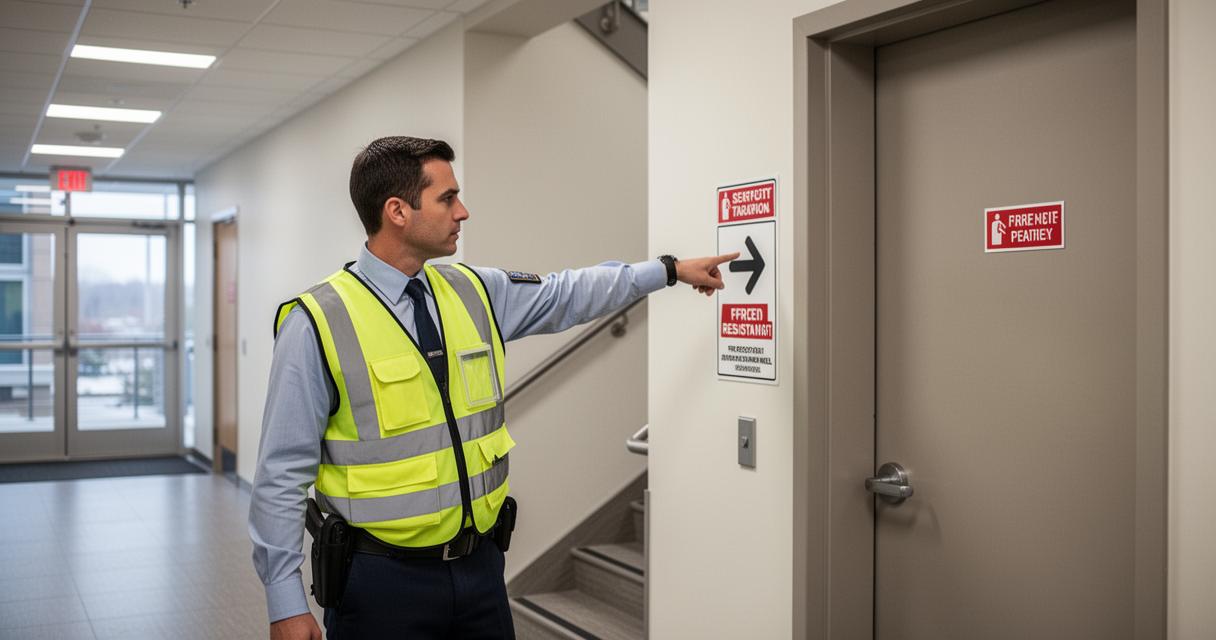
The Different Categories of Fire Evacuation Signs and What They Communicate
At their most fundamental level, emergency exit signage guides people towards escape routes, stairwells, and exits. Beyond these directional signs, facilities may also require notices indicating the location of fire-fighting equipment, assembly points, and areas where particular hazards exist. The Regulatory Reform (Fire Safety) Order 2005 places a legal obligation on the so-called Responsible Person — typically an employer or building manager — to ensure that signs and notices clearly indicate escape routes and exits at all times. This duty sits alongside broader requirements for fire risk assessment, staff training, and the regular maintenance of all fire safety measures.
Key Principles for Positioning Evacuation Signs Effectively in a Building
Positioning evacuation signs correctly is every bit as important as choosing the right type. Signs must be placed so that, at any point along an escape route, at least one sign is clearly visible to an occupant moving towards safety. Safe egress depends on unambiguous directional cues, particularly at decision points such as corridor junctions or stairwells. The Building Regulations 2010 require emergency lighting in almost all buildings other than private residences, reinforcing the principle that signs must be readable even when normal lighting has failed. Particular attention should be given to areas where the route is not immediately obvious, where there are changes in floor level, or where large numbers of members of the public may be present.
How Lighting Conditions Directly Affect the Visibility and Reliability of Evacuation Signs
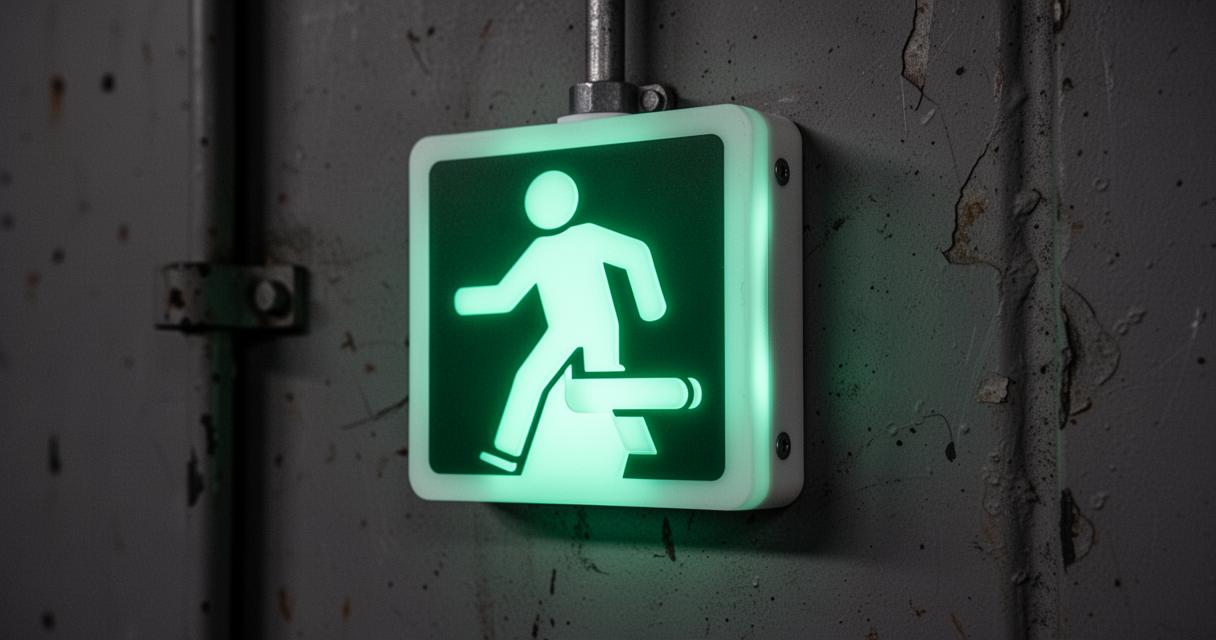
A sign that cannot be seen is no sign at all. The performance of any emergency evacuation plan relies heavily on the ability of occupants to read and follow signage quickly and calmly. Inadequate lighting increases the risk of accidents and injuries during emergencies, and can contribute to the kind of panic that makes orderly evacuation impossible. This is why fire safety regulations in the UK treat emergency lighting not as an optional extra, but as a core component of any compliant fire safety strategy.
The Role of Photoluminescent and Illuminated Signs in Low-Light Emergencies
There are two principal approaches to ensuring signs remain visible when normal power is lost. Photoluminescent signs absorb ambient light during normal conditions and then glow in the dark when the lights go out, making them a reliable passive solution for many environments. Illuminated signs, by contrast, are actively powered and remain bright regardless of ambient conditions. Maintained emergency lighting stays on continuously, offering consistent visibility at all times, whilst non-maintained lighting activates only upon power failure, conserving energy during normal operations. LED emergency bulkheads are increasingly favoured for their reliability and energy efficiency, and upcoming standards are expected to strongly encourage their adoption in place of older systems.

Best practices for maintaining evacuation sign performance through proper lighting
Compliance with BS 5266 standards is not a one-off exercise but an ongoing commitment. Periodic testing is a legal and practical necessity: a daily visual check, a monthly examination of systems, and an annual full-duration test are all recommended as part of a robust maintenance regime. The responsible person must keep records of all tests and any remedial work carried out. Emergency lighting and escape routes require ongoing attention; without a structured approach, maintenance can be overlooked. Fire safety compliance also demands that escape route lighting, anti-panic lighting for open areas, and high-risk task lighting for specialist environments are each addressed appropriately in the fire risk assessment. Staff training, routine audits, and leveraging modern self-testing systems where available can all help ensure that workplace safety is genuinely upheld rather than merely documented.